
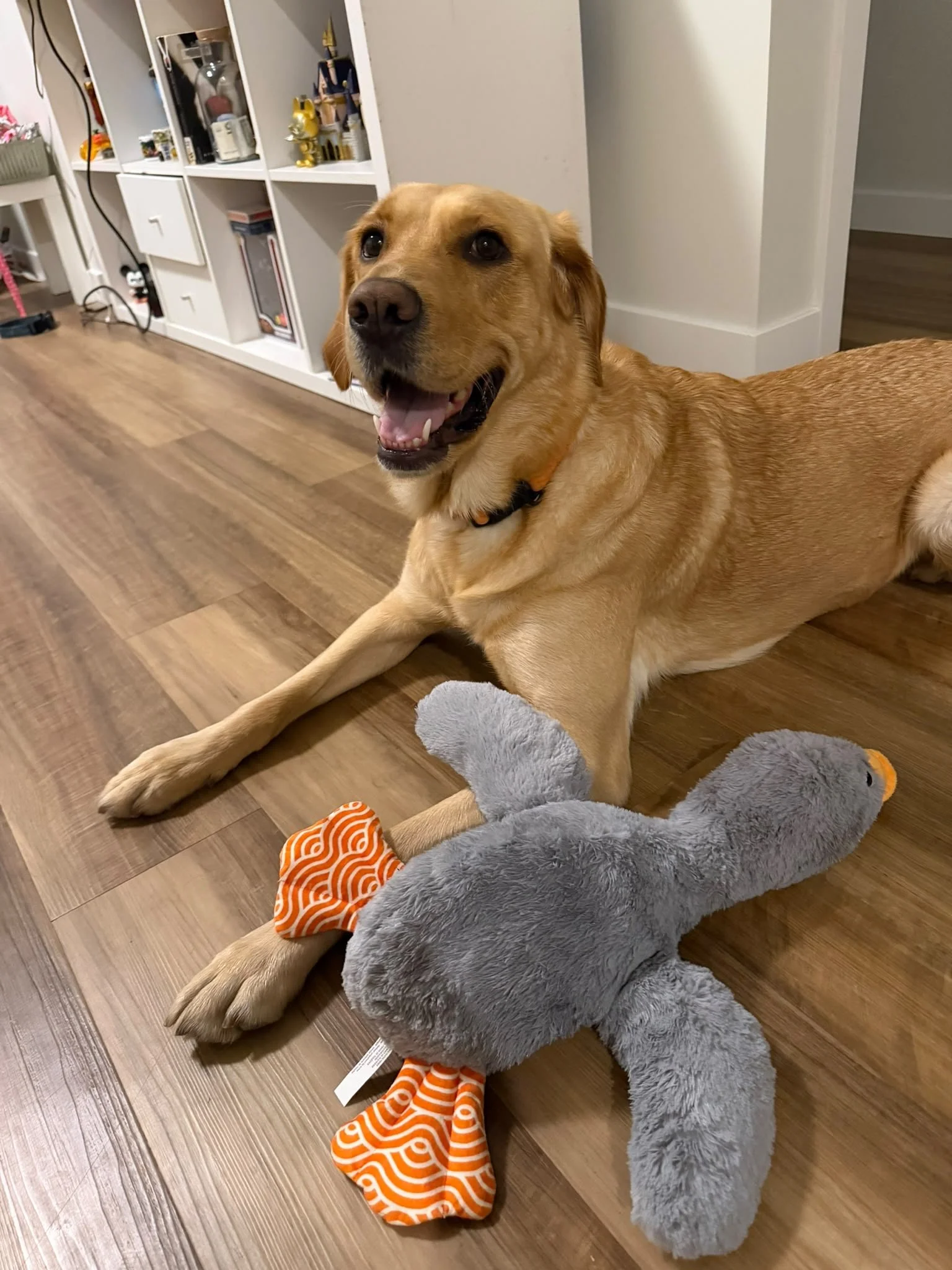
From Constant Hypervigilance to Enjoying Walks Again
Goldador • 3.5 yo • Leash Reactivity • Trigger Stacking • HypervigilanceEvery Walk Felt Like a Battle
When Leia first came to Calm Canine Care, going for a walk had become stressful for everyone involved.
According to her owner, Leia reacted to dogs, people, bicycles, scooters, motorcycles, joggers, strollers, and other moving objects. Every outing felt unpredictable, and both Leia and her owner finished walks feeling overwhelmed.
Leia had already worked with four different trainers, but despite everyone's best efforts, lasting progress remained out of reach. One trainer even recommended using a shock collar. Her owner wasn't comfortable with that approach and wanted to find a trainer who focused on understanding the behaviour rather than simply suppressing it.
Looking Beyond the Barking
One of the first things I noticed during Leia's assessment was that she was calm and relaxed inside her home.
Outside was a completely different story.
As soon as the walk began, Leia rarely seemed able to relax. She constantly scanned her surroundings, searching for potential triggers. If she reacted once, recovering was difficult, and every additional trigger made the next reaction more likely.
Rather than seeing a dog that simply "needed more obedience," I saw a dog struggling with emotional regulation.
Leia wasn't choosing to be reactive.
She was struggling to feel safe enough to process the world around her.
That observation completely changed the training plan.
Understanding Trigger Stacking
One of the biggest discoveries throughout Leia's training was the role of trigger stacking.
Imagine having one stressful event after another without enough time to recover between them.
That's what many reactive dogs experience during a walk.
One passing dog may not seem significant on its own, but after seeing several dogs, cyclists, and joggers within a short period of time, Leia's ability to cope gradually disappeared.
As her stress accumulated, she became more vigilant, more reactive, and less able to respond to her owner.
Understanding this pattern allowed us to stop focusing only on preventing reactions and instead prioritize helping Leia recover between them.
Our Training Focus
Rather than relying on punishment or forcing obedience around triggers, we concentrated on helping Leia feel more capable of navigating the world.
Training focused on:
Improving emotional regulation
Managing threshold distance
Reducing trigger stacking
Reinforcing voluntary disengagement
Encouraging sniffing and decompression
Creating opportunities for successful recovery after seeing triggers
Structured Board & Train sessions to provide consistent practice in real-world environments.
Throughout the Board & Train program, we carefully observed Leia's behaviour, adjusted the environment when needed, and gradually built her confidence without overwhelming her.
The Turning Point
One of the biggest changes wasn't simply that Leia barked less.
It was that she started living differently.
As training progressed, Leia spent less time searching for danger and more time exploring her surroundings.
She sniffed.
She investigated.
She relaxed.
Instead of remaining trapped in a constant cycle of scanning and reacting, she began recovering more quickly after encountering triggers and returning to normal behaviour on her own.
For reactive dogs, those moments of recovery are often some of the most meaningful signs of progress.
The Outcome
By the end of training, Leia showed remarkable improvements.
Her owner reported that she was:
Recovering more quickly after seeing triggers
Spending less time scanning the environment
Better able to disengage from dogs and other distractions
More emotionally regulated during walks
Enjoying walks instead of simply enduring them
Perhaps the most rewarding feedback came when Leia's owner described her as:
"A completely different dog."
Leia later returned for an overnight boarding stay, giving me another opportunity to observe her behaviour. The improvements had been maintained, suggesting that the new skills were transferring beyond the original training environment.
Could Your Dog Benefit From a Similar Approach?
If your dog struggles with leash reactivity, fear, or becoming overwhelmed during walks, you're not alone—and your dog isn't being "stubborn."
Every behaviour assessment begins by identifying what's driving your dog's behaviour so we can build a training plan tailored to their individual needs.
Ready to help your dog feel more confident on walks?
Book a Behaviour Assessment today and let's start building a calmer future together.